
 Info@raoscaffolding.com
  +91-9312069392
What Should You Check Before Renting Scaffolding for a Construction Project?
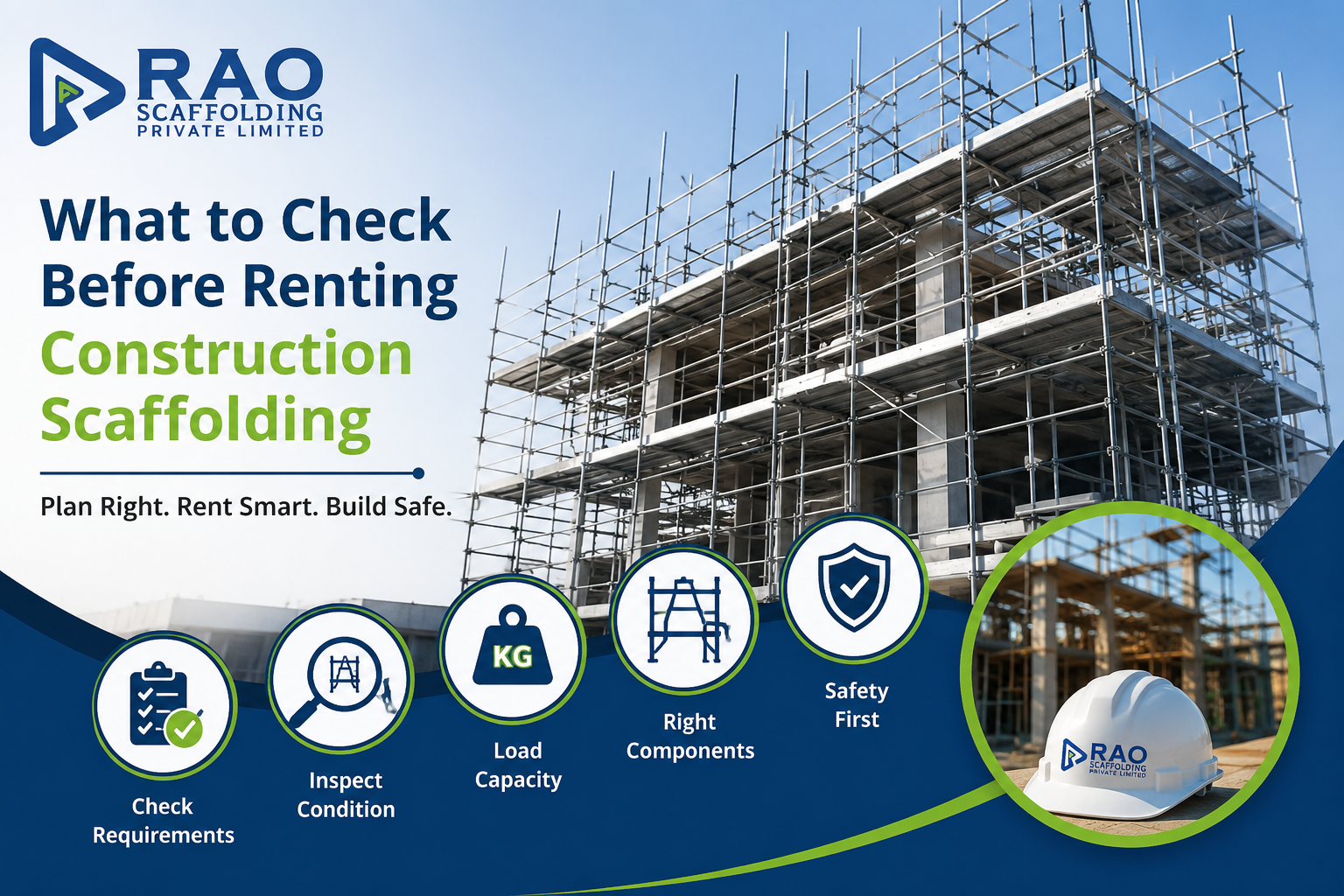
Choosing the right construction scaffolding rental is an important decision for any building project. Scaffolding is not simply a temporary structure that provides workers with access to height. It also needs to support the work being carried out safely and efficiently throughout the project.
Whether you are working on a residential building, commercial property, industrial facility, or infrastructure project, choosing scaffolding only because the rental price is low can lead to material shortages, delays, or additional costs.
Before renting scaffolding, contractors and project managers should check the scaffolding type, condition, load requirements, components, site conditions, rental terms, and supplier support.
Here is what you should check before finalizing your scaffolding rental.
1. Start With Your Project Requirements
Before contacting a scaffolding supplier, understand what your project actually requires.
Consider:
- Building height and number of working levels
- Type of construction or maintenance work
- Required working platform
- Expected load on the scaffolding
- Available space around the structure
- Project duration
- Indoor or outdoor application
- Ground and site conditions
For example, scaffolding requirements for brickwork may differ from those for plastering, painting, maintenance, or heavy industrial work.
Providing these details to the rental company helps them recommend a more suitable scaffolding arrangement rather than simply supplying a standard quantity.
2. Check the Condition of the Scaffolding
When renting construction scaffolding, don’t focus only on quantity. Material condition matters just as much.
Before accepting the equipment, inspect the major components for:
- Bent pipes or frames
- Excessive corrosion
- Cracks or visible damage
- Deformed connecting components
- Damaged platforms
- Faulty locking mechanisms
- Missing components
Rented scaffolding can be previously used, but it should be maintained and suitable for its intended application.
If damaged or questionable components are found during delivery, have them replaced before the scaffolding is erected.
3. Understand the Required Load Capacity
Different construction activities place different loads on scaffolding.
The working platform may need to accommodate workers, tools, equipment, and construction materials. Therefore, the scaffolding arrangement should be planned according to the expected loading rather than estimated casually.
Tell your supplier what type of work will be performed and what materials are expected to be placed on the platform.
A competent scaffolding supplier can then help determine an appropriate configuration based on the project requirements and applicable safety requirements.
4. Confirm Exactly Which Components Are Included
One common rental problem is assuming that every required component is included in the quoted price.
Depending on the scaffolding system and project, you may require components such as:
- Standards or vertical members
- Ledgers
- Transoms
- Base jacks
- U jacks
- Adjustable props
- Walkway planks or platforms
- Bracing
- Clamps and connectors
- Access components
Ask for a detailed material list before confirming your order.
This is particularly important for large construction projects because missing components can stop installation and affect the project schedule.
5. Check the Site Before Installation
The location where scaffolding will be erected needs proper assessment.
Check for:
- Uneven or unstable ground
- Excavations
- Water accumulation
- Nearby vehicle movement
- Restricted access
- Overhead obstructions
- Electrical hazards
- Other structures around the work area
Scaffolding should be properly supported and installed according to the system requirements and site conditions.
If the site has difficult ground conditions or restricted working space, discuss these issues with the supplier before the rental is finalized.
6. Ask Who Will Handle Erection and Dismantling
Don’t assume installation is automatically included in a construction scaffolding rental package.
Ask the supplier whether the quotation includes:
- Transportation
- Loading and unloading
- Erection
- Modification
- Inspection
- Dismantling
Where professional erection services are provided, clarify their scope beforehand.
Scaffolding should be erected, altered, inspected, and dismantled by competent personnel following applicable safety requirements and the manufacturer’s or system supplier’s instructions.
7. Check the Rental Agreement Carefully
A low rental rate may not represent the actual project cost.
Before signing the agreement, confirm:
- Rental period
- Minimum rental duration
- Transportation charges
- Installation charges
- Dismantling charges
- Security deposit
- Extension charges
- Damage or loss conditions
- Replacement policy
Also ask what happens if your construction project takes longer than expected.
Having these details in writing can prevent misunderstandings and unexpected charges later.
8. Evaluate the Scaffolding Supplier
The quality of your rental experience depends heavily on the supplier.
Look for a company that can provide:
- Suitable scaffolding systems
- Consistent material quality
- Proper quantity
- Timely delivery
- Technical assistance
- Replacement support
- Clear rental terms
For larger projects, supplier capacity is particularly important. A company should be able to provide additional components if your project requirements change.
Rao Scaffolding provides scaffolding solutions for construction requirements, helping contractors and project teams source scaffolding based on their project needs rather than choosing equipment solely on price.
9. Don’t Overlook Safety Requirements
Scaffolding safety involves more than the main structure.
Depending on the system and application, suitable platforms, guardrails, access arrangements, bracing, base arrangements, and other protective measures may be required.
The exact requirements should be assessed according to the scaffolding system, site conditions, work activity, and applicable regulations.
Your site engineer or competent safety professional should be involved in the planning and inspection process.
10. Compare the Total Rental Cost
When comparing construction scaffolding rental quotations, don’t compare only the price per day, week, or month.
Compare the complete package.
For example, one supplier may offer a lower rental rate but charge separately for transportation and installation. Another supplier may provide a more comprehensive package.
Therefore, compare:
Rental + Transportation + Installation + Accessories + Additional Charges = Actual Project Cost
This gives you a more realistic basis for choosing a supplier.
Construction Scaffolding Rental: Final Checklist
Before renting scaffolding, make sure you have checked:
- Project height and working requirements
- Expected load requirements
- Suitable scaffolding system
- Condition of all components
- Required quantity and accessories
- Ground and site conditions
- Erection and dismantling arrangements
- Transportation charges
- Rental duration
- Extension and damage policies
- Supplier’s technical and replacement support
Conclusion
Choosing construction scaffolding rental should be based on more than getting the lowest quotation. The right decision considers the project’s working requirements, material condition, load requirements, site conditions, required components, installation arrangements, and overall rental cost.
Taking time to check these points before placing your order can help reduce delays, avoid unnecessary expenses, and support a safer and more organized construction site.
For contractors looking for dependable scaffolding solutions, Rao Scaffolding can be considered when evaluating scaffolding requirements for construction projects. The key is to discuss your actual site requirements with the supplier before finalizing the rental.
Frequently Asked Questions
1. What should I check before renting construction scaffolding?
Check the scaffolding type, material condition, required load capacity, components, platform requirements, site conditions, rental duration, transportation, installation, and overall rental charges before confirming the order.
2. How do I choose the right scaffolding for my construction project?
Consider the building height, type of work, expected load, working area, ground conditions, project duration, and access requirements. A reliable scaffolding supplier can help determine the appropriate system and quantity.
3. What is included in construction scaffolding rental?
It depends on the supplier and rental agreement. The package may include scaffolding components, transportation, loading and unloading, erection, dismantling, and accessories. Always request a detailed quotation before booking.
4. Is it better to rent or buy scaffolding for a construction project?
Renting is often practical for temporary or project-specific work, particularly when you do not want to store and maintain scaffolding after the project. Buying may make more sense for companies with frequent, long-term scaffolding requirements.
5. Why should I choose Rao Scaffolding for construction scaffolding rental?
Rao Scaffolding offers scaffolding solutions for different construction requirements, with a focus on suitable material, project-specific requirements, and dependable supply. Discussing your site conditions and work requirements with the supplier helps ensure you receive the appropriate scaffolding for your project.